
Reading Your Meter: Digital vs Analog
How to read an analog dial meter or a digital LCD meter in Pakistan, what a unit (kWh) actually represents, and how to check your bill against the reading yourself.
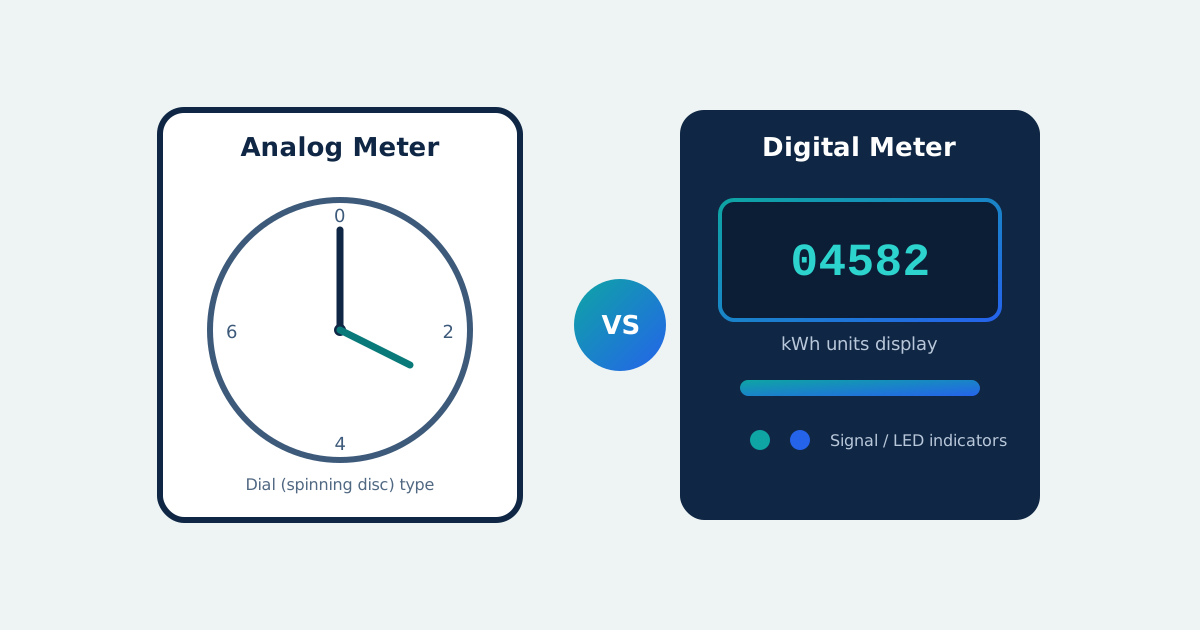
Most people never look at the meter itself — the bill arrives, gets paid, done. But being able to read it is what lets you catch a billing error before it lands on your account rather than after. Pakistan still runs two meter types side by side: older analog (electromechanical) meters with a spinning disc, and newer digital ones with an LCD readout — and each is read completely differently.
Which Type Do You Have?
Older connections — particularly in rural areas and older buildings — still run analog meters with mechanical dial pointers. Most DISCOs have spent the last several years replacing these with digital LCD/LED meters, and some newer installations go further with smart meters capable of remote reads and TOU tracking.
Reading an Analog Dial Meter
A row of small dials, each with a pointer moving clockwise or counter-clockwise depending on its position in the gear train. The method:
- Read the dials left to right
- Record the number each pointer has most recently passed — not the number it's closest to
- A pointer sitting between two digits always reads as the lower one
- Neighboring dials often spin in opposite directions — that's normal, not a fault
- String the digits together in order for your total kWh reading
Reading a Digital Meter
Considerably simpler — the cumulative reading shows directly on the screen, usually labeled 'kWh' or 'Total.' Some units cycle automatically through several screens (voltage, current, cumulative units), so if the first screen you see isn't the total, wait a few seconds for it to come around.

What a 'Unit' Actually Is
One unit is one kilowatt-hour: the output of a 1,000-watt load running for an hour straight. A 100-watt fan running 10 hours uses exactly 1 unit. A 1.5-ton inverter AC, pulling roughly 1,200–1,500 watts on average, can use 10–12 units in a single 8-hour day — which is most of the explanation for why AC-heavy months push totals so much higher than the rest of the year.
Checking Your Own Reading Against the Bill
Subtract the 'previous reading' printed on your bill from your current meter reading — that number should land close to the bill's 'units consumed' figure, with some small gap expected since the meter-read date and the bill-generation date aren't identical. A large, unexplained mismatch is worth writing down (both readings, with dates) and taking to your DISCO's complaint center for a re-check. Your official bill is always one reference-number lookup away on Electricity Bill.
Two Different Numbers: Meter Number and Reference Number
The meter number, stamped on the physical meter, is a separate thing from the 10–14 digit reference number printed on your bill — the reference number is what you use to check or pay online. The meter number only changes if the meter itself is swapped; the reference number is tied to the account, not the hardware.
Compare your meter reading with your latest bill
Check Bill Now →Check any Pakistan DISCO electricity bill
Use your 14-digit reference number on the home checker, or jump straight to the DISCO that bills your address.