
Why Your Electricity Bill Spikes in Summer
Why Pakistani electricity bills double or triple between May and September — AC load, slab jumps, and rising FPA, stacked on top of each other, explained separately.
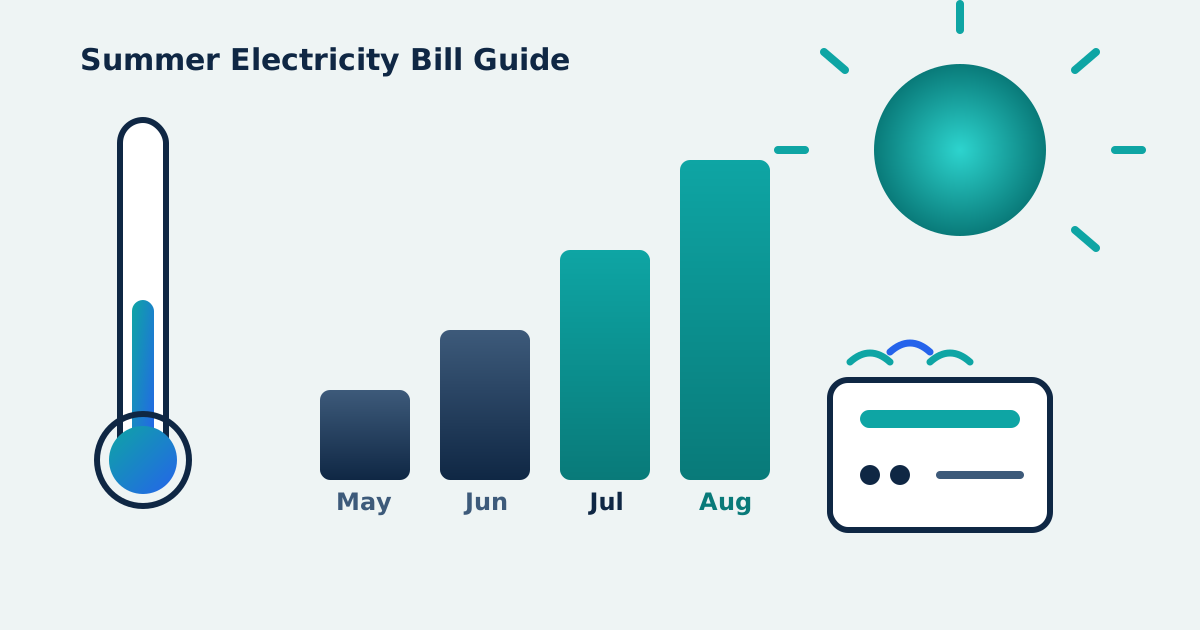
If your bill just doubled and your first thought is 'meter error,' the more likely explanation is three ordinary things stacking on top of each other at the same time: AC hours climbing, a progressive tariff that punishes the extra units disproportionately, and an FPA surcharge that tends to rise right when thermal generation ramps up for the season. Each one alone is a modest increase. Together, from May through September, they're what makes this one of the most-searched electricity questions in the country every single year.
1. The AC Is Doing Most of the Damage
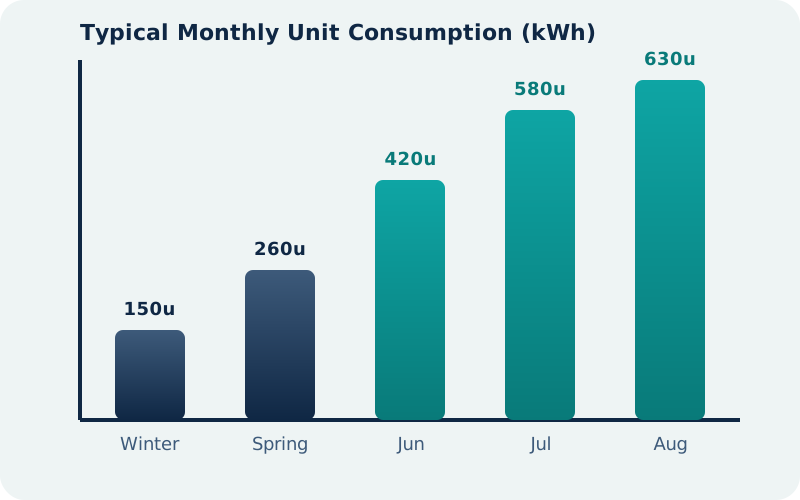
One 1.5-ton unit running 8 hours a day can burn 300–450 units a month by itself — more than plenty of households use across an entire winter month. Run two or three units, even a few hours each, and a home that was comfortably inside the 200-unit slab lands in the 400 or 700-unit slab instead, where the per-unit rate steps up sharply.
That's the mechanism behind a household going from 180 units in February to 550-plus in June: not a dramatic change in habits, just cooling that now runs most of the day and night instead of not at all.
2. Crossing a Slab Boundary Costs More Than It Looks Like It Should
The domestic tariff is slab-based, so units above a threshold aren't just billed proportionally more — the rate itself steps up, and depending on the billing structure that higher rate can apply to the whole bill rather than only the units past the line. That's why a jump from, say, 350 to 420 units can feel like a far bigger rupee increase than the extra 70 units alone would suggest.
3. FPA Tends to Climb Right Alongside Demand
Peak summer load pulls in more expensive thermal generation — furnace oil, LNG, coal — to cover what hydel and cheaper sources can't. That raises the average per-unit fuel cost, and NEPRA's approved FPA surcharge follows it up. See our FPA guide for the full mechanics of how that number gets set each month.
4. It's Not Only the AC Working Harder
Refrigerators and freezers cycle more often to hold their internal temperature against higher ambient heat, water pumps run longer as household water use climbs, and geysers still see occasional evening use in some regions even in summer. None of these move the needle alone, but they compound on top of the AC load rather than sitting separate from it.
What Actually Moves the Number Back Down
A handful of changes soften the spike without giving up cooling comfort entirely:
- Set the AC to 26°C instead of 18–20°C — cuts AC power draw by roughly 20–30%
- Add a timer so it switches off a few hours after you're asleep, not running all night
- Clean filters and coils monthly — a dirty unit can use up to 25% more power for the same cooling
- Close curtains during peak daylight hours before turning the AC on, not after
- Stagger the washing machine and iron instead of running them while the AC is also on
Before You Assume a Meter Fault
Pull up your reference number on Electricity Bill and compare this month's units against last month's. In most cases, a genuine rise in units, run through a higher slab and a higher FPA, accounts for the entire jump — no fault required. If the units are close to last month but the rupee amount isn't, that's the point to call your DISCO's helpline and ask for a reading verification.
Check how many units your bill shows this month
Check Bill Now →Check any Pakistan DISCO electricity bill
Use your 14-digit reference number on the home checker, or jump straight to the DISCO that bills your address.